PET PREFORM MOULD
PET Preform Moulds for Bottle and Jar Production
Custom PET preform moulds planned around the final container, neck finish, preform weight, injection machine and blow moulding process. Cavity layout, runner, cooling and ejection are evaluated as one production system.
Preform Consistency Starts at the Mould


The preform neck must fit its closure, while body weight and wall distribution must support the intended bottle after blowing. A PET preform injection mould produces the preform; a bottle blow mould shapes the final container in the blow moulding machine. Mincong can also supply bottle blow moulds, with preform and bottle geometry reviewed together against your equipment and project requirements. Runner, gate, cooling and ejection choices need to be evaluated with both processes in view.
Neck Finish
Threads, sealing surfaces and support rings are checked against the cap and bottle specification.
Body Distribution
Wall and gate design are evaluated for the specified preform weight and downstream blow moulding.
Cavity Balance
Runner layout, cooling and ejection are coordinated across the cavity set. If preforms remain cloudy after material readiness is confirmed, use the targeted cooling and melt review for PET preform haze to choose the next investigation.
PET Preform Mould Configuration
The cavity count, runner, cooling circuit and ejection system follow the neck finish, target preform weight, PET grade, injection machine and downstream blowing process. For an existing quality problem, compare the PET preform defect corrective routes. A proposed recycled feedstock needs a separate regrind and rPET qualification before the tooling scope is fixed.
| Products | PET bottle and jar preforms to customer drawings |
| Material | Specified PET grade |
| Cavity Count | Selected around output, preform size and machine |
| Runner and Gate | Defined for the resin, preform geometry and process |
| Cooling | Designed around neck and body temperature control |
| Ejection | Chosen for preform release and handling requirements |
Connect the Preform to the Final Bottle
Start with the final bottle drawing, neck finish, target preform weight, PET grade and blowing method. These inputs guide the preform design, cavity layout and cooling plan before the mould is fixed.
- Confirm bottle and preform drawings, weight and neck standard.
- Review resin, machine, runner and drying requirements.
- Define cavity count, cooling, gate and ejection arrangement.
- Trial the preforms and check them against the agreed dimensions and downstream process.
Typical PET Preform Applications


Beverage bottles, food jars and custom containers may require different neck finishes, weights and blow ratios. A preform proposal depends on the final container and downstream equipment.
Beverage Bottles
Preforms matched to water and beverage bottle designs.
Food Jars
Wide-mouth and custom neck packaging projects. Explore our wide-mouth PET preform moulds for jars for the neck, closure and handling requirements.
Custom Containers
Preforms developed from a defined final bottle and process.
What to Send for a PET Preform Mould Quote
Share the final bottle or preform drawing, neck finish, target weight, PET grade, blowing method and machine data you already have. If a drawing or specification is not yet available, describe the container and production goal so we can identify what needs to be confirmed. Our PET preform mould design review explains how these inputs affect the tooling proposal.
- Preform and final bottle drawings, neck finish and target weight
- PET grade and intended blowing method
- Target production rate and preferred cavity count
- Injection machine and downstream equipment specifications
PET Preform Mould FAQs
Planning a complete bottle project? Read our PET preform mould vs bottle blow mould guide for the different tooling stages, machine interfaces and quotation inputs.
What information is needed for a quotation?
The preform or bottle drawing, neck finish, weight, material, capacity target and injection machine data are the starting points.
How do you decide cavity count?
We balance target output with preform size, shot capacity, cooling and the available machine. Compare accepted preform output across cavity counts using the same cycle and yield assumptions, and define the mould and downstream cooling scope before comparing cycle proposals.
Can the mould be designed for a specified neck finish?
Yes. Provide the neck drawing and matching closure information for review.
PET preform tooling video
Selected videos from our project archive. Each clip relates to its own tooling or product example. Select Play to load the YouTube player.
PET preform mould
Archive video from Mincong Mould’s YouTube channel.
Watch on YouTube ↗For specific production problems, see PET preform black-spot corrections and mould condensation control.
PRODUCT SHOWCASE
Explore PET Preform and Closure Tooling
Explore related tooling for your packaging project. Each page explains its own scope and quotation requirements.

Valve Gate PET Preform Mould
Explore product →
PET Preform and Bottle Blow Mould Set
Explore product →
CARBONATED BEVERAGE PREFORMS
Carbonated Drink PET Preform Moulds
Define the bottle, closure and pressure-package validation before tooling approval.
Explore product →
EDIBLE OIL BOTTLE PROGRAMMES
Edible Oil PET Preform Moulds
Define the oil bottle, closure, handle interfaces and filling conditions before selecting preform tooling.
Explore product → Concept illustration
PERSONAL-CARE BOTTLE PROGRAMMES
Cosmetic PET Preform Moulds
Define final bottle appearance, neck and dispensing interfaces before selecting the preform tooling.
Explore product → Concept illustration
WATER BOTTLE PREFORMS
Water Bottle PET Preform Moulds
Match the preform, bottle programme and blow-validation requirements before tooling.
Explore product →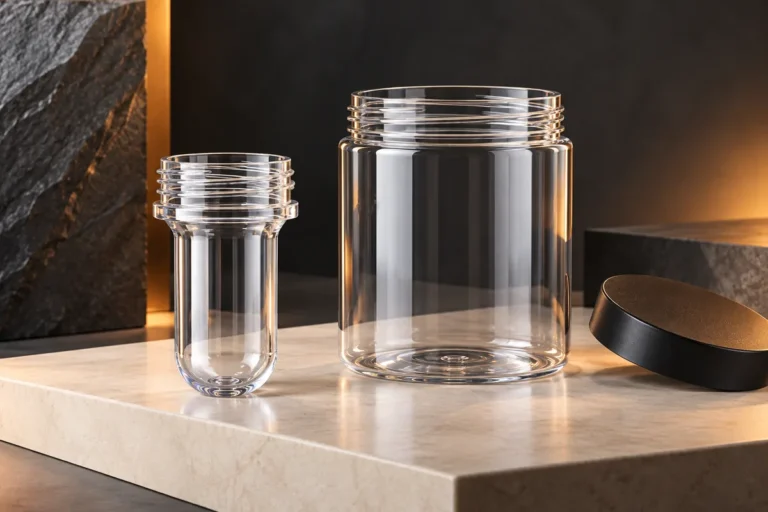 Concept illustration
JAR PREFORMS
Wide-Mouth PET Preform Moulds
Review preform tooling for jars against the approved neck, closure and bottle requirements.
Explore product →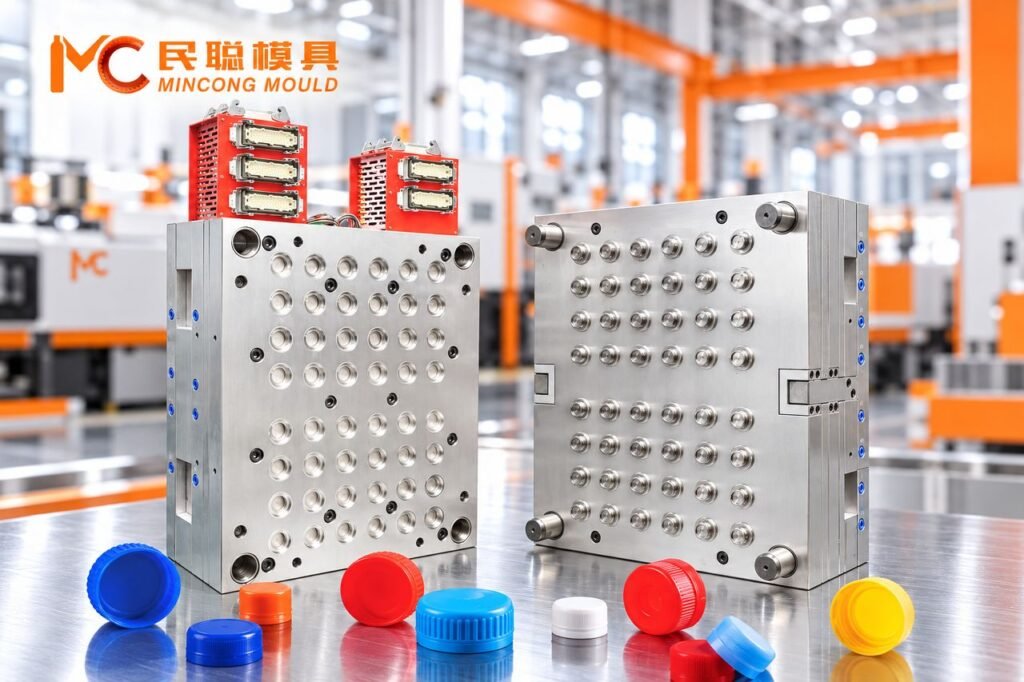
BEVERAGE CLOSURES
Water & Beverage Cap Moulds
Review cap tooling around the bottle neck, closure structure and production requirements.
Explore product →Images marked as concept illustrations are AI-generated, not project photographs. Review each page for its tooling scope and project-specific requirements.
Discuss a PET Preform Mould
Send the bottle and preform requirements to start the mould configuration review.