A new cap-forming insert will not restore the mould if its locating seat, mating shut-off or support has also changed. Before replacing an injection mold component, identify the complete interface that controls its position and function. The objective is a usable forming system after service, not merely a fresh visible surface.
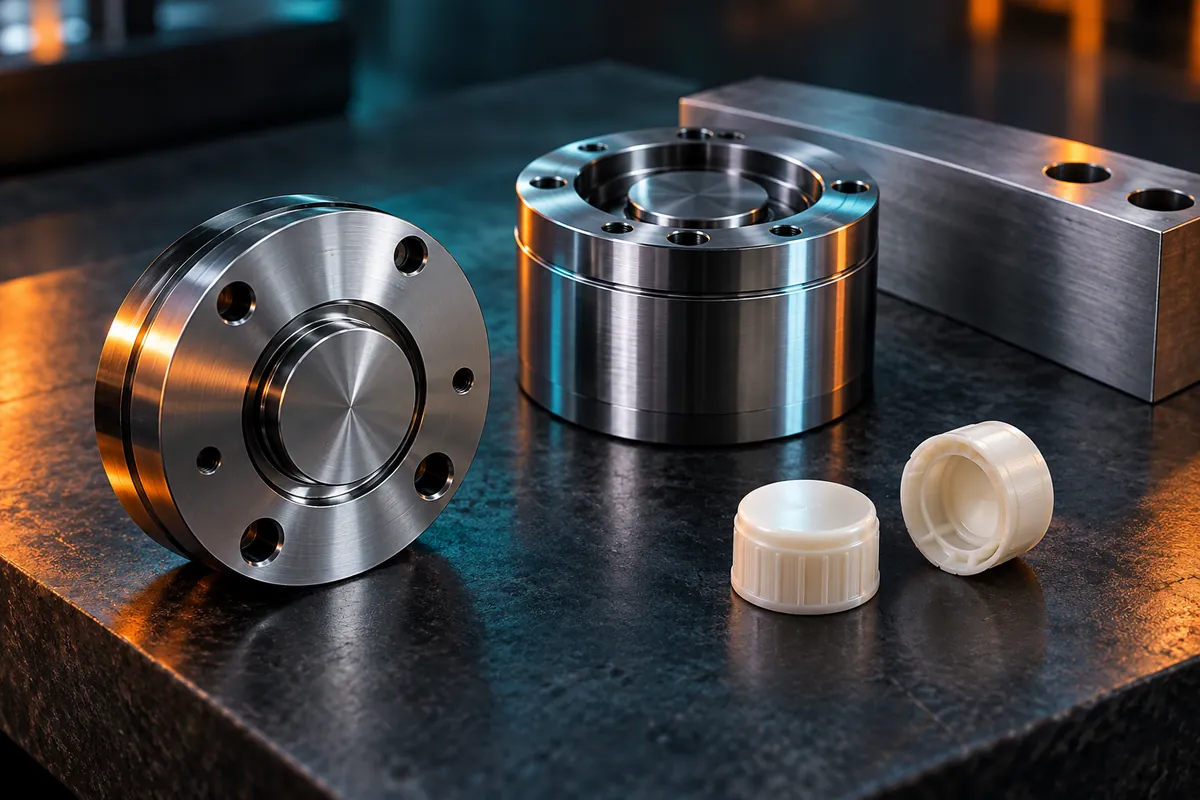
Identify the failed interface before ordering the spare
Relate the part defect to the forming feature: thread, seal, hinge, gate or another defined region. Inspect the corresponding insert and the surfaces that locate and support it. Distinguish an isolated damaged feature from movement or wear in the assembly around it.
Use the current component identity and drawing revision. Two inserts with the same external outline may form different cap details or depend on different mating components. A stock description such as “cavity spare” does not establish that either will fit the installed position correctly.
Choose a single replacement or a matched repair
| What the inspection establishes | Repair decision to review |
|---|---|
| Local forming damage with sound locating and mating surfaces | A correctly specified replacement insert may be sufficient. |
| Wear at a mating shut-off or locating seat | Review the pair or support interface as well as the visible insert. |
| Position changes as the tool warms or loads | Investigate alignment, support and operating condition before treating the insert as the sole cause. |
The decision should identify which references remain valid and which must be restored. Do not remove material from an unknown seat merely to make a new part enter it. That can change the insert's position and create a different cap problem.
Restore location before judging the moulded result
During the approved service procedure, check seating, orientation and required fits against the actual tool documentation. Confirm that the mating elements engage without an unintended interference. Use the specified assembly sequence rather than substituting additional closing force for correct alignment.
General interlock guidance from DME explains why mould alignment and thermal condition matter at precision shut-offs. It is background for this review, not an instruction to fit a different supplier's component or adopt its catalogue geometry in an existing Mincong tool.
Reconnect the functions hidden behind the insert
Review any cooling connection, seal, vent access or moving interface affected by the replacement. A correctly formed face can still perform poorly if the replacement obstructs a vent or changes a cooling passage connection. Complete the appropriate leak, movement and connection checks before returning the tool to production.
For gate or hot-runner-related work, identify the installed system and obtain its service instructions. A visually similar replacement is not proof of compatibility. Keep nozzle, seal and control responsibilities with the qualified supplier instead of modifying an interface informally during a cavity repair.
Accept the repaired tool using the component's original purpose
Compare cavity-identified samples under the agreed conditions. Check the feature involved in the repair and its mating function: for example, closure fit and seal after a thread or sealing insert change, or lid movement after hinge-region work. Include appearance and any new witness at the repaired boundary.
If the new insert reproduces the original defect, return to the interface investigation rather than successively polishing away the new forming surface. For future tools, ask which wear areas can be replaced, how those spares are identified and how replacement will be accepted. This makes serviceability part of the tooling design without promising a universal changeover time or unrestricted interchangeability.
Related engineering resources
- Flip Top Cap Mould
- Bottle Cap Mold Maintenance: Cleaning, Cooling and Wear Checks
- Plastic Injection Mold Polishing: Restore Finish Without Losing Geometry
- Injection Molding Flash on Caps: Which Edges Need Action?
Technical references and scope
- DME — alignment, thermal variation and shut-off protection
- DME — parting-line interlock installation instructions
Supplier examples describe their own products. They do not establish Mincong certification, supplier affiliation or a validated project result. Proposed checks must be agreed for the specific component, resin and production equipment.