Injection molding rib design for a plastic cap starts with the job of the feature. An internal rib may support a top panel or another feature; an exterior flute may help the user grip the cap. They can look similar in a rendering, but their functional requirements are different.
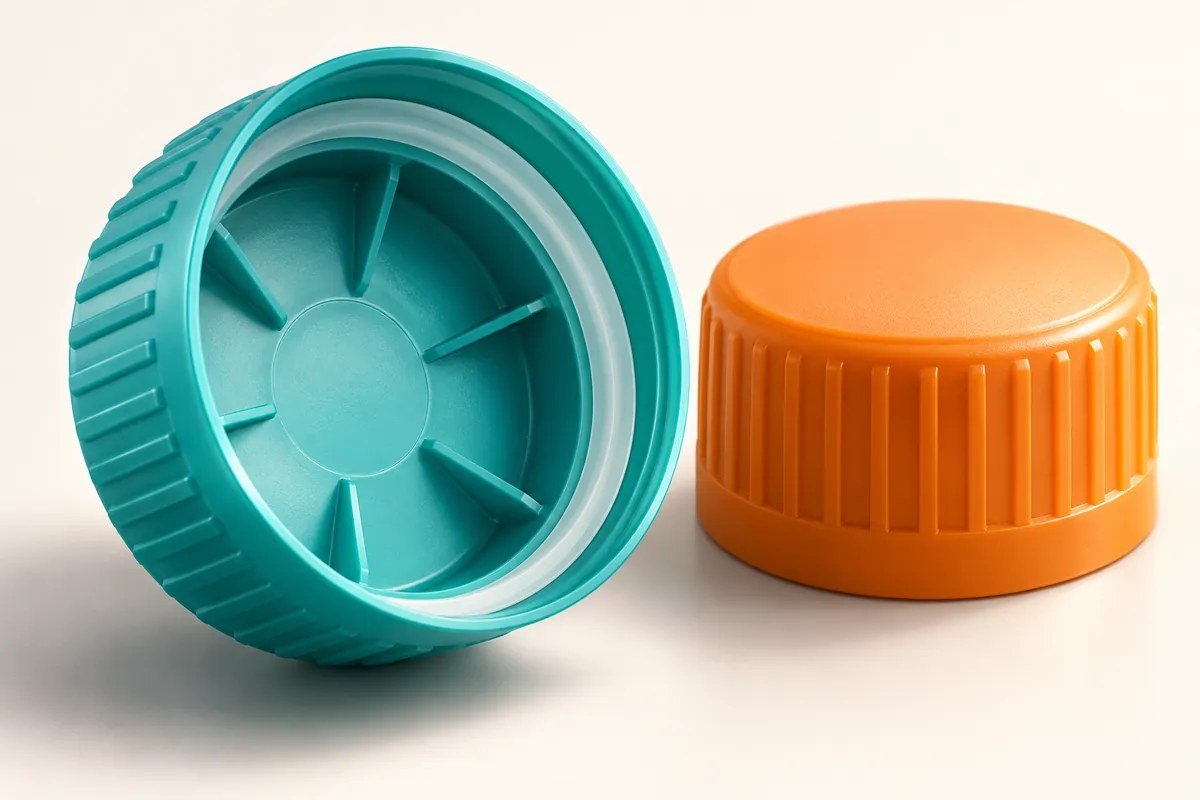
Before adding ribs to a closure, identify the deformation you want to control and the surfaces that must remain functional. A cap can become locally stiffer while its sealing, opening or mould-release behaviour still needs further review. More ribs are not an acceptance criterion.
Define the load and protect the functional surfaces
Explain when the cap needs support: during handling, application, opening or another specified use. Mark where the load is applied and what result would be unacceptable. Avoid approving a rib pattern solely because it looks stronger in CAD.
Then identify the sealing surfaces, thread or snap engagement, dispensing opening, hinge and any tamper-evident features relevant to that closure. These are constraints for the design review, not spare space for additional plastic.
For a screw closure, for example, a proposed internal support feature needs clearance from the approved bottle-neck and sealing arrangement. For a flip-top closure, review the lid’s travel and closed position as well as its appearance. The existing cap and bottle-neck fit guide remains the reference for that interface.
Distinguish structural ribs from grip texture
An exterior grip pattern is primarily assessed through the intended handling and opening task. A structural rib is assessed through the support it provides to a defined part region. One feature may contribute to both, but that contribution needs confirmation on the actual closure.
Keep their approval questions separate. The grip discussion concerns hand contact and the agreed use conditions. The support discussion concerns load, deformation and the effect on neighbouring features. Calling both “ribs” should not lead to the same drawing note or test.
A similar caution applies to decorative texture. A visually prominent pattern does not establish a load-bearing function, and a hidden reinforcement does not automatically improve opening comfort.
Review the rib root as well as its height
Protolabs’ guide to stronger moulded parts describes ribs as a way to support features without simply thickening the whole wall. It also identifies excess material at rib-to-wall intersections as a source of sink risk and discusses the trade-off at fillets.
The practical review therefore needs the rib root, local wall, transitions and intersections—not just a rib height dimension. Two ribs crossing a locally thick junction deserve a different discussion from an isolated rib on a uniform panel.
Protolabs also provides a general rib-to-wall thickness guideline in its injection-moulding design introduction. Such guidance is a starting point for manufacturability review, not a dimension that guarantees performance for every PP or PE closure. The actual resin grade, geometry, surface requirements and tooling arrangement still need assessment.
Keep any agreed rib dimensions on the controlled product drawing. Do not turn an illustration or a general ratio into a substitute for that approval.
Make the feature fillable and releasable
A rib becomes a feature that the mould must form and release. Ask how its orientation relates to the parting and withdrawal directions, what draft and surface finish are proposed, and whether any feature creates an undercut.
Deep or closely arranged features can also create access questions for machining, polishing and maintenance. These considerations belong in the mould review before the geometry is frozen. Protolabs’ design introduction discusses difficult release and venting in deep-rib arrangements; this is a reason to review the actual tooling route, not to apply a universal depth limit.
If an undercut is present, refer to the cap release-route review rather than assuming that a flexible resin will always strip safely. For a flip-top cap, preserve the intended motion of the hinge and lid; do not add reinforcement across a region intended to flex without a separate functional review.
Compare designs against the original problem
Our recommendation is to document the proposed change and the checks it must pass before modifying production tooling. A useful comparison keeps the material specification, mating components and measurement conditions identifiable.
| Original concern | Evidence to request for the revised design |
|---|---|
| Excessive movement of a panel | Deformation check under the agreed load and support conditions |
| Difficulty applying or opening the cap | Application or opening assessment using the specified mating parts |
| Disturbance near the sealing region | The relevant fit and sealing checks, with defined conditions |
| Unacceptable visible surface | Agreed viewing method and reference samples |
| Release damage or incomplete features | Cavity-identified trial samples and observations during release |
The project should define the test method and acceptance limit for each applicable row. This table is a review framework, not a claim that a particular cap has passed these tests.
If a change produces a visible depression, use the sink-mark inspection guide to document it. That investigation should remain separate from deciding whether the rib fulfils its structural purpose.
Put the approved change into the tooling record
Record the drawing revision, changed features and surfaces that must remain unchanged. Confirm who approves the geometry and who evaluates the resulting samples. Keep an accepted reference so a later replacement insert can be checked against the same requirement.
Any effect on cavity layout, access or release should be identified before the supplier confirms the modification scope. A small-looking product change is not automatically a small tooling change, and a stiffer sample is not automatically a complete closure approval.
For a water and beverage cap mould or another closure project, send the cap, mating neck and the problem to be solved. That gives the review a functional target before choosing the rib pattern.