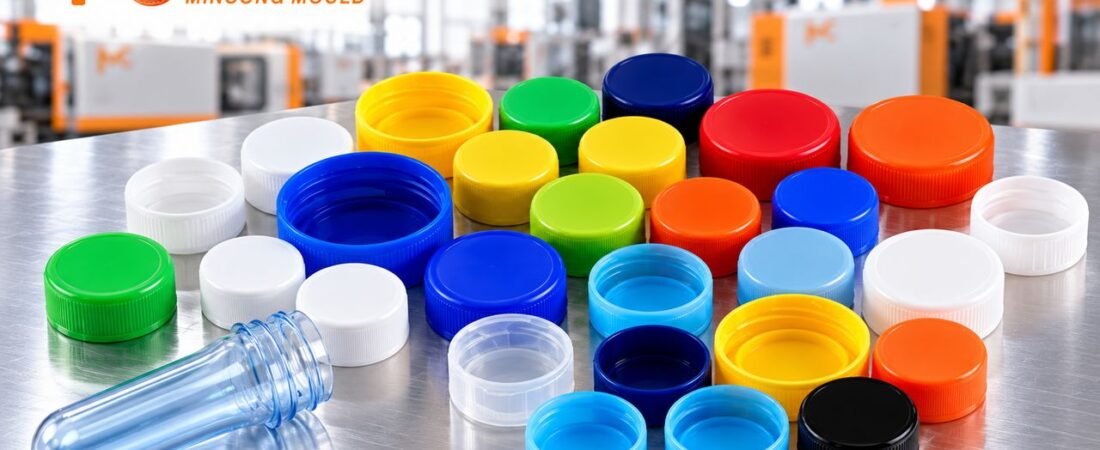
Bottle cap mould design starts with the relationship between the cap and its mating bottle neck. The design review needs to establish how the cap engages, where the seal forms and how the assembled package will be checked. A cap that screws onto a bottle has demonstrated only part of that relationship.
Before confirming the tooling design, review the closure and container together. The following checks help buyers identify interface questions early, while the drawings can still be discussed and revised.
1. Confirm the complete bottle-neck specification
“28 mm cap” is a starting description, not a complete mating specification. Request the full neck-finish designation and the bottle supplier’s current drawing, together with the matching cap drawing.
For a threaded closure, review the thread form, number of starts, engagement and relevant neck heights. The seal may also depend on the bottle opening or the top sealing surface, rather than on thread diameter alone. If ribs are proposed to support the cap, review their relationship to those functional surfaces using the cap rib-design checklist.
Standard neck-finish drawings distinguish several dimensions. For example, T identifies the outside thread diameter, I the internal neck diameter, H the finish height and S the distance from the finish top to the first thread. The applicable drawing defines which dimensions and tolerances govern the project.
Mark the revision of both drawings. If the bottle supplier changes the neck, send the revised interface to the cap mould supplier for review before treating the closure design as unchanged.
2. Identify where the seal is intended to form
Ask a specific question: which surfaces or components are intended to make the seal? The answer determines what the design review must examine.
| Sealing approach | What to confirm before tooling approval |
|---|---|
| Moulded plug or sealing lip | The intended contact with the matching neck and the relevant mating dimensions. |
| Compressible liner | The specified liner, its seating and the contact it must make with the bottle’s sealing surface. |
| Induction heat-seal liner | Compatibility with the container and contents, liner seating and the subsequent sealing process. |
These are review categories, not interchangeable solutions. An induction liner, for example, needs a compatible heat-seal layer; changing the mould alone cannot resolve an incompatible liner-and-container combination.
For a lined pack, include the liner specification in the design review. A liner change can require the cap-and-bottle assembly to be reassessed even when the nominal cap size stays the same.
3. Check engagement and available closing travel together
Thread engagement needs to be considered alongside the cap’s final seated position. A closure may encounter the bottle bead or shoulder before its intended sealing contact is established. Conversely, a dimensional mismatch can affect engagement and torque retention.
Review the mating dimensions and their permitted variation as an assembly. Ask the suppliers to identify any combination that could prevent seating or produce an unacceptable fit. Where a risk is identified, agree how it will be checked through dimensional review and representative samples.
Avoid approving the interface from one cap fitted to one bottle. That sample does not establish performance across all permitted component variation. For a multi-cavity cap mould, agree how samples from different cavities will be identified during the checks.
4. Separate the interfaces on a flip-top closure
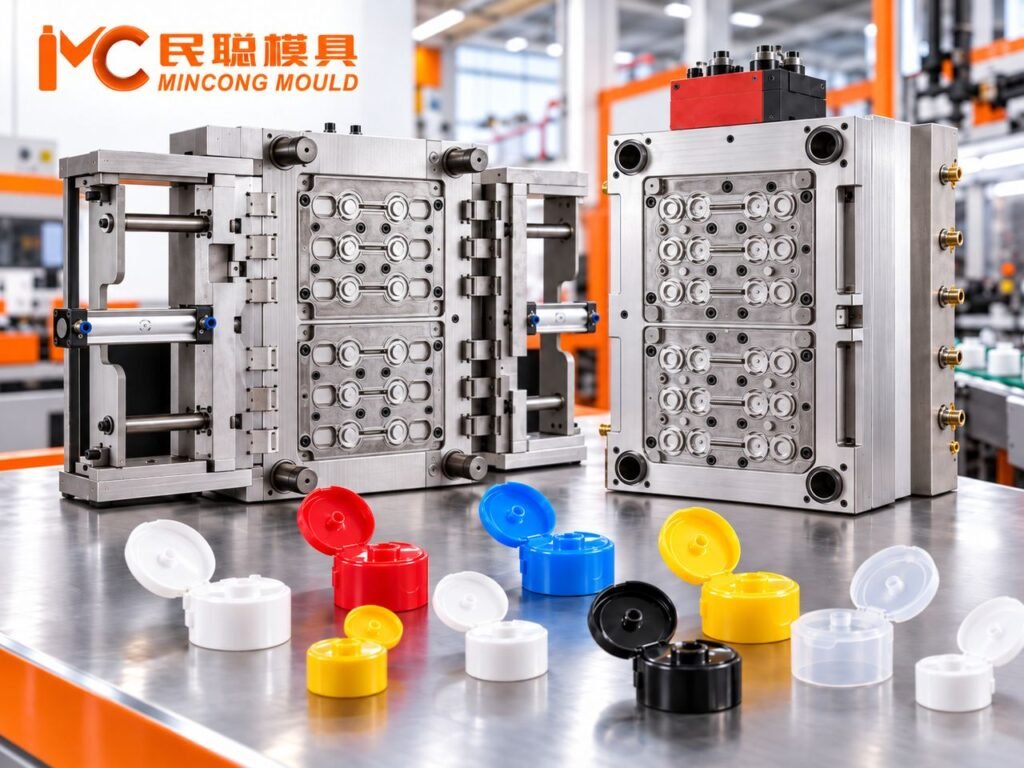
A flip-top closure requires more than a cap-to-neck check. Depending on its design, the review must also address the lid’s engagement with the body and the seal around the dispensing opening.
Record these as separate questions:
- Does the cap body attach to the specified bottle neck as intended?
- Is the intended cap-to-bottle seal established?
- Does the lid close and reopen as required, with its dispensing seal engaged?
A visible closing movement demonstrates motion; it does not by itself demonstrate sealing performance. If a tamper-evident feature is included, give its intended function a separate acceptance check.
For the broader closing sequence, see our automatic-closing flip-top mould trial guide.
5. Define the conditions behind a fit or sealing result
An acceptance record should explain how the samples were assembled and tested. Otherwise, two apparently similar results may describe different conditions.
For screw closures, distinguish application torque from removal torque. Record when removal torque is measured and whether induction sealing or another relevant process takes place between capping and measurement. Select targets with the relevant packaging suppliers for the actual package, rather than adopting a universal value from cap diameter alone.
Agree which functional checks the application requires, the method, the sample selection and the acceptance criteria. Include relevant filling, storage or handling conditions in that discussion. A successful short check is evidence for those test conditions; it is not automatically a shelf-life or transport-performance claim.
If the assembly fails, review the cap, bottle, liner where applicable and assembly conditions together before deciding which component needs to change.
Questions buyers often ask
Can an existing cap sample replace a bottle-neck drawing?
A sample is useful for explaining the proposed closure, but it does not define all mating dimensions or permitted variation. Request the container supplier’s approved neck drawing and identify the samples used for comparison.
Should the same cap mould design work with another bottle supplier?
Confirm compatibility before making that change. Compare the new supplier’s neck specification and tolerances, then agree any assembly and functional checks needed. Matching nominal size alone is insufficient evidence.
Discuss the cap-and-neck interface with Mincong
Share the cap drawing, matching bottle-neck specification, intended resin and sealing approach through our mould project inquiry form. Identify any interface questions that remain open so they can be reviewed before the tooling design is confirmed.
Explore our water and beverage cap moulds for the relevant application. For the wider quotation and delivery discussion, use our cap mould manufacturer RFQ checklist.