Cosmetic Screw Cap Moulds for Neck Fit and Surface Finish
Mincong Mould reviews custom injection tooling for cosmetic screw caps used on defined bottles and containers. The purchase may cover a single cap shell or separately specified inner and outer components. The bottle connection, sealing method and decorative finish must be agreed together: a polished cap that looks correct can still be unsuitable for the package.
Establish which components belong in the mould package
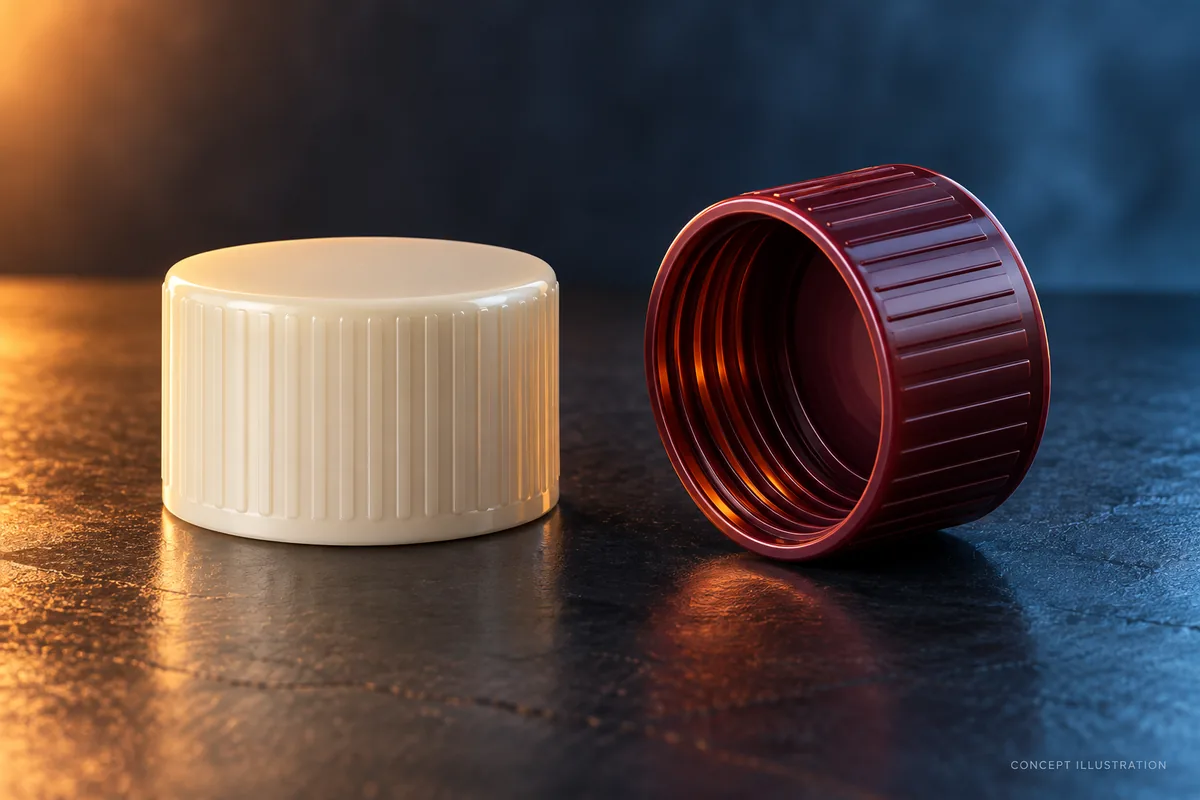
Provide the cap drawing or approved sample together with the mating neck. If the closure contains a liner, inner cap, decorative shell or another insert, identify its material, source and assembly sequence. A quotation for one injection mould does not automatically include those additional parts or their assembly equipment.
A neck-finish designation helps identify the interface but does not define the complete cap. Confirm the approved thread geometry, engagement, contact surfaces and clearances. Where sample and drawing disagree, resolve the reference before tooling starts rather than allowing the mould maker to combine them informally.
Keep the seal independent of the decorative shell
Identify whether the package uses a liner or an approved linerless sealing feature. Mark the surfaces that establish the seal and the areas that may carry gate, parting or ejection witnesses. A decorative outer wall should not become the uncontrolled reference for a functional interface.
Include the intended formulation, filling conditions and relevant package-use requirements in the review. Resin compatibility and finished-package leakage need their own agreed evaluation. Neither a smooth cavity finish nor a tight thread proves that the closure is suitable for every cosmetic formulation.
Choose a release route without sacrificing the thread
The tooling review should compare the thread and other undercuts with the material and proposed release motion. Stripping, unscrewing or another arrangement may be considered, but no route is selected from the label “cosmetic cap” alone. A rigid decorative shell can impose different constraints from a flexible inner component.
Define acceptable release marks and inspect the thread after the agreed conditioning period. Do not use a heavier ejection force to conceal an unresolved undercut or inadequate clearance. If the design needs a change, confirm its effect on the bottle engagement before cutting steel.
Approve the finish as a manufacturing sequence
Provide a physical appearance reference and name the viewing conditions. Distinguish an as-moulded gloss or texture from painting, metallisation or another downstream finish. A mould quotation must identify which operation creates the final appearance and who supplies it.
Review seams, gate position and handling contacts before approving the visible surfaces. A finish that hides a witness on an undecorated trial sample may behave differently after coating. Where decoration is included, assess representative finished samples rather than approving only the uncoated part.
Set the trial around both cap and package
Compare cavity-identified caps for fit, agreed opening and closing behaviour, seal performance and appearance. Use the specified bottle and any liner or inner component. Separate tooling inspection from formulation compatibility, transit and final packaging qualification; agree the owner and acceptance method for each required test.
Send the component files or samples, neck specification, resin grades, finish reference, assembly scope and available machine information. Mark critical interfaces and the surfaces customers see. We can then review the mould package and trial requirements against one defined cosmetic closure, without assigning universal cavities, cycle time or cosmetic performance.
Continue the project review
Oil & Functional Closure Mould · Bottle Cap Mould Design: Bottle-Neck Fit and Sealing Checks · Unscrewing Injection Mold Design: What to Review for Threaded Caps · Injection Mold Texture: Achieving the Finish Without Release Problems
Send drawings and project requirements →
Technical references and scope
General application and engineering references checked on 31 October 2026. Supplier examples do not establish Mincong project performance or supply relationships. The review and selection steps above are engineering proposals for the defined project.