Pipette Tip Moulds for Defined Fit, Outlet and Release Requirements
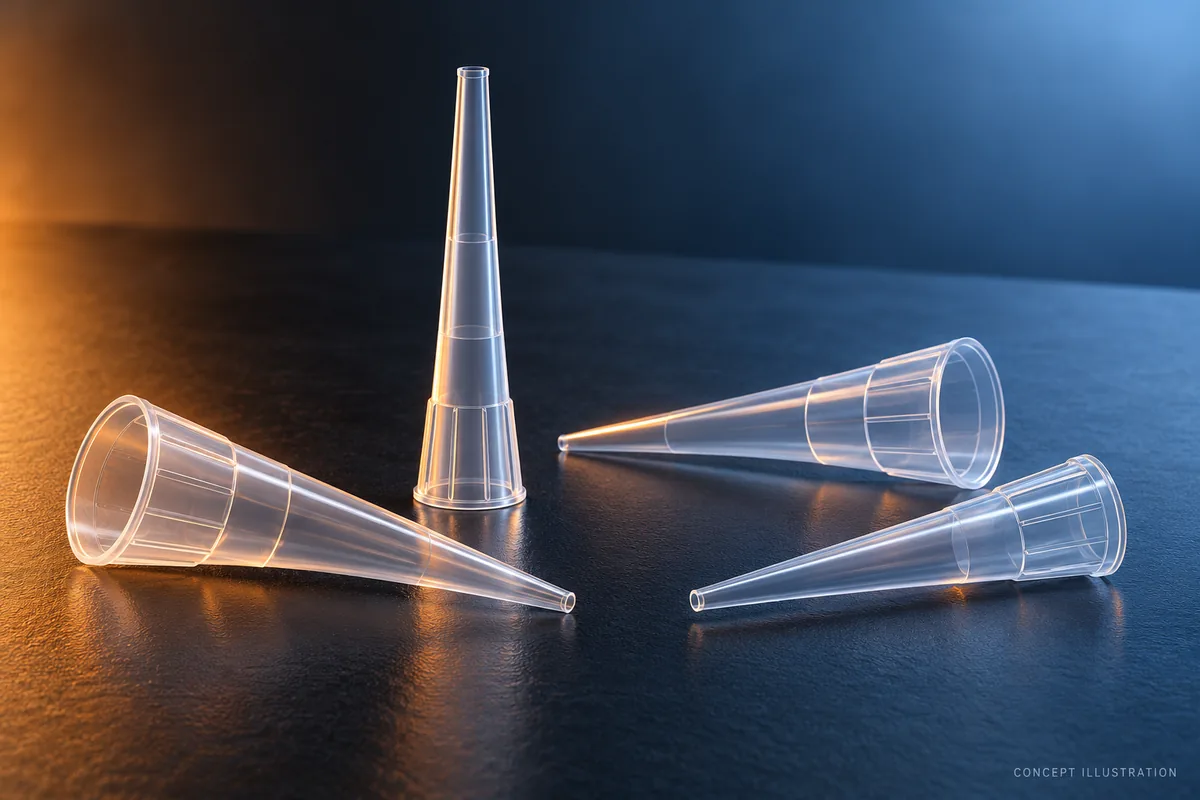
Mincong Mould reviews custom injection moulds for plastic laboratory pipette tips against a defined component drawing and instrument interface. The mould must address the tapered internal geometry, small outlet and reliable removal of the part. Supplying tooling does not by itself establish liquid-handling accuracy, sterility or compatibility with every pipette.
Fix the instrument interface before selecting the layout
Provide the tip drawing, reference samples and the mating instrument information that can be shared. Mark the insertion region, intended seating position and any restrictions on attachment and removal. A nominal tip volume does not describe the complete mechanical connection.
Define how fit will be evaluated on representative instruments and who supplies them for trials. Where the customer uses several instrument families, agree the actual compatibility list. A visually similar taper or a single successful attachment is not evidence of universal fit.
Treat the outlet and internal surface as functional geometry
Identify the outlet shape, permitted edge condition and the surfaces that contact the liquid. Define relevant limits for flash, obstruction, gate residue and release marks. Inspection should have a method capable of resolving the features in question, rather than relying on an ordinary catalogue photograph.
The core and cavity arrangement must form the intended internal passage and outlet. Review support, alignment and forming interfaces before steel cutting. An extremely small feature should not be sharpened, polished or enlarged informally during troubleshooting because that can alter the liquid-handling result.
Develop support and removal around the slender component
A long tapered part can require careful management of filling, cooling and release. Compare the proposed geometry, actual resin and support conditions instead of assuming a syringe-barrel ejection arrangement will transfer unchanged. Protect the instrument-fit region as well as the outlet during removal.
For automated handling, define how tips are oriented, collected and transferred. Rack loading, filter insertion, inspection and packaging are distinct operations. State which equipment is included and which interfaces the mould must accommodate. A cavity-count proposal alone does not confirm compatibility with a downstream automation system.
Make material and production controls explicit
Identify the approved resin grade and any permitted colour, additives or treatment. PP is a common application material, but the exact grade and finished-component requirements still require customer approval. Do not infer low-retention behaviour, extractables performance or cleanliness from the polymer family alone.
If the component includes a filter, separate the tip-body tooling from filter supply, insertion and testing. Where controlled production, sterilisation or special packaging is required, define the relevant responsibilities and evidence before quotation. This product page makes no independent cleanroom, sterile or regulatory certification claim.
Accept tooling and liquid-handling results on named criteria
Use cavity-identified samples to inspect the fit region, passage, outlet, appearance and agreed dimensions after conditioning. Follow with the specified instrument attachment and removal checks. Any liquid-delivery, retention or contamination evaluation needs the customer's agreed protocol and responsible test facility.
Send the 2D/3D component files or approved samples, instrument interface, resin grade, appearance and cleanliness requirements, handling route and available machine data. Identify any filtered version separately. This gives a practical basis for reviewing the mould scope, trial samples and exclusions without inventing a guaranteed cycle or analytical performance.
Continue the project review
Medical Packaging Mould · Syringe Barrel Moulds for Defined Bore and Interface Requirements · Plastic Injection Molding Tolerances: Agreeing Cap Inspection Before Tool Approval
Send drawings and project requirements →
Technical references and scope
General application and engineering references checked on 31 October 2026. Supplier examples do not establish Mincong project performance or supply relationships. The review and selection steps above are engineering proposals for the defined project.