A PET preform mould proposal that includes a hot runner should define how the gate will be assessed, not simply promise a clean finish. The buyer needs to know which characteristics matter, how samples will be compared and what happens if the result changes across cavities or after a restart.
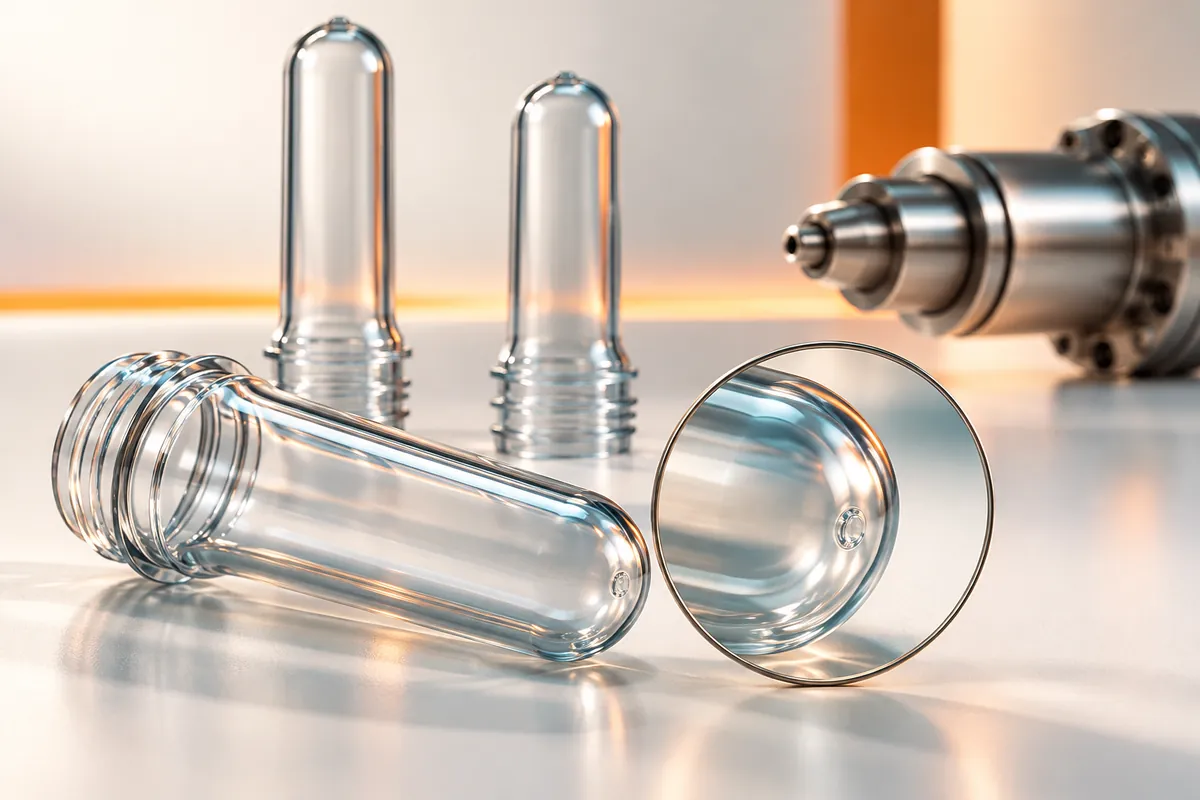
This guide turns that discussion into an acceptance plan. It complements the broader PET preform mould design review; it does not provide a temperature recipe or instructions for adjusting a live hot runner.
Translate “clean gate” into an inspectable requirement
The gate is the entry into the cavity. A valve-gated proposal still needs a defined expectation for the witness left on the preform. “No runner to cut” and “no visible gate mark” are different claims. Ask the supplier to explain exactly which result the quotation includes.
Begin with the approved preform drawing and intended container. Mark the gate region and identify any appearance, handling or downstream concerns that need assessment. Where a dimensional limit is required, define the measured feature and method rather than copying a number from an unrelated preform.
Photographs can help establish what the parties mean, but viewing angle, lighting and magnification change the impression. Keep an agreed reference sample or a controlled set of images with the inspection instructions. A flattering photograph alone is a weak acceptance standard.
Identify the system behind the brand name
Husky’s official PET tooling information identifies its Ultra hot runners as part of its PET preform offering. Its general hot-runner overview distinguishes hot-tip and valve-gate configurations. Those descriptions show why a brand name alone is not a complete specification.
When YUDO is proposed for a Mincong project, request the actual system designation, application confirmation and documents supplied with that configuration. A valve-gate quotation should also identify the actuation arrangement and the controls and services it requires.
A Husky alternative needs its own application and integration review before it can be confirmed for a Mincong project. Do not assume that a similarly described nozzle, controller or gate component can replace another supplier’s part. Neither brand establishes interchangeability, an agency relationship or a guaranteed acceptance result.
The useful purchasing question is: which identified system is included, who confirms its suitability, and which parts of installation and commissioning are included in the scope?
Connect samples to cavities and time in the run
An attractive sample from one position does not describe the full mould. Our recommendation is to agree a sampling plan that preserves cavity identity and the point in the run at which each sample was collected.
Separate the conditions you intend to assess: an established production run, initial production after the approved start-up procedure, and production after a defined interruption and restart. The exact sampling frequency and number of parts should be agreed for the project; there is no universal count in this guide.
For each collection, retain the preform revision, resin identification, machine and hot-runner setup reference, active cavities and relevant changes. Use the existing PET process-control guide for material preparation and heat-history records rather than repeating a drying procedure here.
If a gate result is inconsistent, this record helps distinguish a recurring cavity pattern from a time-dependent change. It structures an investigation; it does not diagnose a worn component or prove that temperature is the cause.
Agree the inspection method before comparing results
A practical acceptance sheet can separate four questions:
| Review item | Agreement to make before the trial |
|---|---|
| Gate appearance | Viewing conditions, reference images and the features to record |
| Any measured gate feature | Defined location, instrument or method, and agreed limit |
| Loose material or handling concerns | How observations are recorded and what constitutes rejection |
| Downstream container performance | Which later tests are required, who conducts them and how samples remain traceable |
Keep observations factual. Record a protrusion, recess, surface change or loose material as observed rather than assigning a root cause from a picture. A disagreement about appearance should not be hidden inside an undefined statement such as “gate quality acceptable.”
Likewise, passing a visual gate check does not establish acetaldehyde content, intrinsic viscosity or final bottle performance. Where those properties matter, the project needs the relevant agreed tests and material requirements. The mould quotation should make clear which checks are included and which remain with another party.
Preserve the link to the blowing trial
In a two-stage bottle project, gate inspection of the injection-moulded preform and validation of the finished container answer different questions. Retain sample identities when preforms move to reheating and blowing so a later observation can be traced back to the injection run.
Agree how a downstream concern will be reviewed before any tool correction is authorized. The parties may need matched samples and information from both stages. Do not treat every bottle-base concern as proof that the preform gate, hot-runner brand or mould steel must change.
The preform mould versus blow mould comparison explains the separation between these tooling stages.
Close the open items at handover
Keep the accepted samples, inspection method and relevant configuration references together. Identify who receives a gate-related issue, which records accompany it and how replacement components are identified. Routine care and spare-part identification belong with the PET preform mould maintenance record.
For a PET preform mould project, send the current preform drawing, intended container, actual machine information and any existing gate requirement. Request a project review so the proposed system and acceptance scope can be discussed together, before “clean gate” becomes a disagreement at the trial.