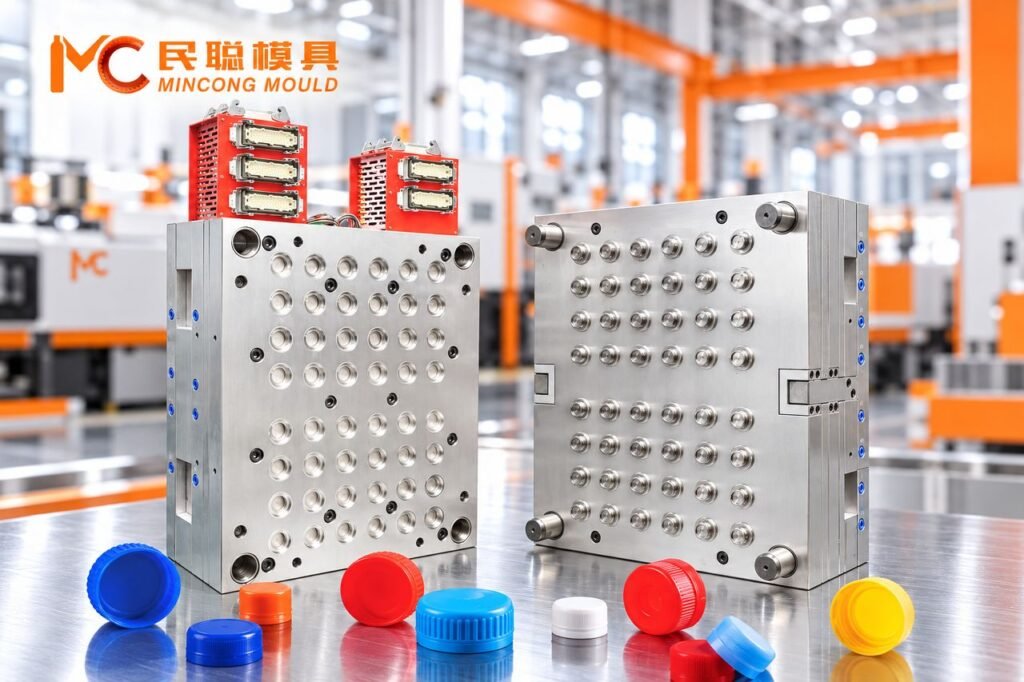
Wide-Mouth PET Preform Moulds for Jars
A wide-mouth PET preform mould starts with the jar opening and closure, then connects them to the preform body, release arrangement and downstream container process. Mincong reviews these inputs together before fixing the tooling configuration.
Send the jar drawing, neck specification, intended closure and available machine information. We can identify what is defined, what needs a joint review and which assumptions must remain open in the quotation.
Request a wide-mouth preform mould review
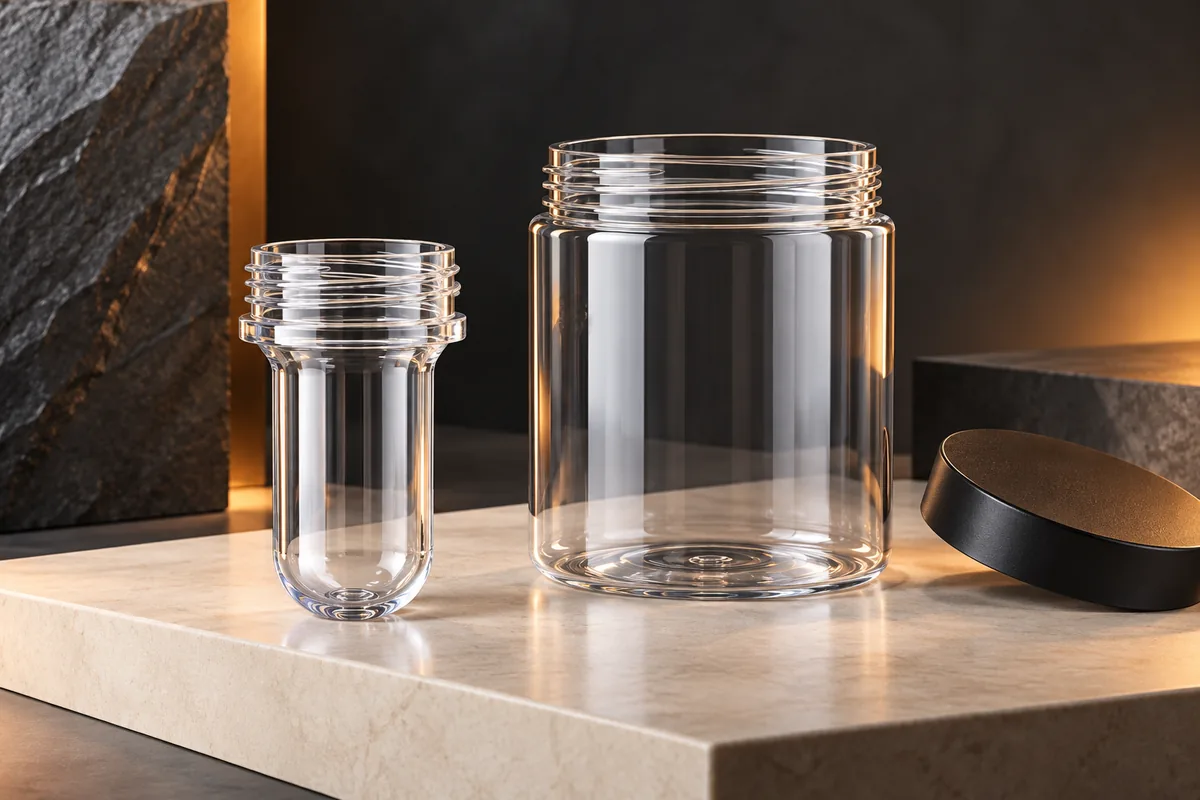
A jar project needs more than a larger neck diameter
The opening must work with the chosen closure, while the preform body must suit the intended jar and forming route. A nominal mouth size does not define the thread, sealing land, support features or allowable marks at tooling interfaces.
Provide the neck drawing and matching closure specification together. If the closure has a liner, sealing insert or another defined sealing arrangement, identify it at the start. The mould review should use the same drawing revision as the packaging team.
This page concerns injection tooling for the PET preform. For the wider product family, see our PET preform mould overview. If the tooling stages are unclear, our preform mould and bottle blow mould comparison explains their different jobs.
What we review before proposing the mould
| Review area | Information needed | Decision to record |
|---|---|---|
| Jar and closure | Jar drawing, intended contents and closure specification | Approved neck interface and packaging requirements |
| Preform | Drawing revision, target weight and specified PET grade | Product basis for the tooling proposal |
| Neck-forming parts | Critical surfaces, thread geometry and permitted witness marks | Release arrangement and inspection locations |
| Machine and handling | Actual machine specification, available space and removal equipment | Mould envelope, movement and service interfaces |
| Cooling and output | Available utilities and target accepted production | Trial conditions and evidence required |
| Downstream forming | Blowing method, equipment and jar acceptance plan | Responsibilities for container validation |
Specify the neck-forming and release arrangement
Ask which tooling components form the neck and how they open or release the preform. Identify the surfaces that contact the closure and those used for handling. These areas should be located in the inspection plan, rather than covered by a general statement that the sample “looks good.”
Service access also belongs in the proposal. Component identification and the agreed replacement scope help the production team order the correct parts later. A replaceable component does not, by itself, establish that a different neck or preform weight can be introduced without further review.
Define the hot-runner package as a configuration
Where a hot runner is proposed, record the manufacturer, system identification, gate concept, controller scope, connections and any actuation requirements. A YUDO option needs a defined configuration for the specified PET and preform. A Husky option requires project-specific suitability and supply confirmation before it can be included.
Brand names do not establish that a system fits an existing cold half, controller or machine. The written proposal should distinguish the mould supply from equipment or accessories supplied by others. Use our PET preform hot-runner gate acceptance guide to define the sample and inspection evidence before the trial.
Agree what the trial must demonstrate
Preform samples should remain traceable to cavity and trial conditions. Agree how neck dimensions, weight, appearance and relevant body characteristics will be checked, including the condition of the sample when it is measured.
For a two-stage jar project, accepted injection samples are an input to the blowing trial. They are not proof that the finished jar meets every filling, closure or distribution requirement. State who will conduct those checks and what evidence is needed before final packaging approval. Our preform weight and wall-thickness review explains why a weight result alone cannot approve material distribution.
Our preform mould design review covers the drawing approval process. The quotation guide helps compare included tooling, trial and handover scope.
Questions buyers often ask
Can we start from a jar sample?
A sample can help explain the application. Identify whether there is an approved jar, preform and neck drawing, or whether development is still required. Any unresolved geometry must be listed before a firm tooling approval.
Can a standard bottle preform simply be used for this jar?
That decision needs the jar geometry, closure interface and actual forming process. Do not assume that a suitable weight alone proves the preform will work.
Which cavity count or cycle time should we specify?
Start with the required accepted output and the available equipment. Cavity count and cycle commitments belong to the reviewed project configuration and trial basis, not a universal catalogue value.
Plan production and service together
For the handover discussion, read our PET preform mould maintenance guide and accepted-output planning guide. They help define records to preserve after the tooling proposal is agreed.
Send a clear starting package
Send the available documents in the same revision set and mark unresolved items. A preliminary enquiry can begin with partial information; detailed tooling approval needs the remaining decisions recorded.
| Enquiry item | What to identify |
|---|---|
| Jar and closure interface | Jar and neck drawings, matching closure specification, sealing arrangement and any approved samples |
| Preform definition | Drawing revision, target weight, specified PET grade and any wall locations requiring inspection |
| Project status | Repeat of an approved design or a new development; identify which party owns the open geometry decisions |
| Production interfaces | Actual injection and blowing equipment information, handling arrangement and available utilities |
| Acceptance scope | Required preform and finished-jar checks, responsible parties and evidence needed for approval |
Keep the accepted-output target separate from a preferred cavity count. If a weight or neck change is requested, identify it explicitly rather than treating it as an unchanged repeat order. Mincong can review the supplied package and distinguish a preliminary proposal from a configuration ready for detailed approval.
PRODUCT SHOWCASE
Explore PET Preform and Closure Tooling
Explore related tooling for your packaging project. Each page explains its own scope and quotation requirements.