HANDLE MOULD
Plastic Handle Moulds for Bottles and Buckets
Custom injection moulds for water bottle handles, oil container handles and bucket carrying parts. The tooling review covers container fit, carrying load, resin, cavity count and ejection. Fit and strength acceptance criteria are agreed for the intended container. Send handle and container drawings for a mould review.
Handle Geometry Drives the Tooling Plan
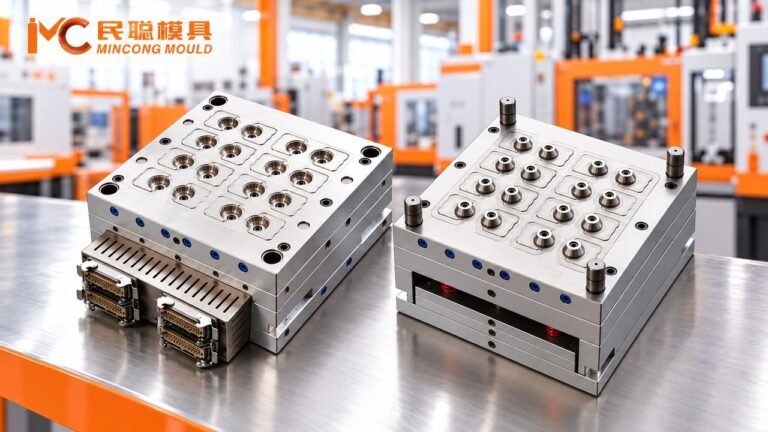

A handle must fit the real neck or rim and carry the intended load after assembly. Wall thickness, resin, snap geometry and ejection affect the result; fit and load should be checked on the matching container.
Container Fit
The handle, neck or bucket attachment points are evaluated as a matched assembly.
Strength and Flex
Cross section, resin and hinge or snap features are reviewed against handling requirements.
Stable Ejection
Tooling and ejection are planned to protect flexible shapes and reduce distortion.
Handle Mould Configuration
Cavity count, runner, cooling and ejection are chosen after reviewing the handle geometry, matching container, resin, expected load and available injection machine.
| Applications | Water bottle handles, oil bottle handles, bucket handles and carrying rings |
| Resin | Selected according to the handle design and application |
| Cavities | Project-specific, based on dimensions, output target and machine |
| Runner | Hot or cold runner options |
| Cooling and Ejection | Designed around thin sections and flexible geometry |
| Mould Steel | Selected for expected production and service plan |
Evaluate the Handle with Its Container
We review the handle drawing together with the bottle neck or bucket rim. The carrying load, attachment method, resin and assembly method guide the mould layout and trial criteria, including checks for deformation after ejection.
For a bottle handle weight-reduction project, see our guide to balancing handle weight and carrying performance.
- Review container interface, attachment method and clearance.
- Confirm load requirements, resin and expected handling conditions.
- Set mould layout, runner, cooling and ejection strategy.
- Trial moulded handles on the actual container where possible.
Typical Handle Applications
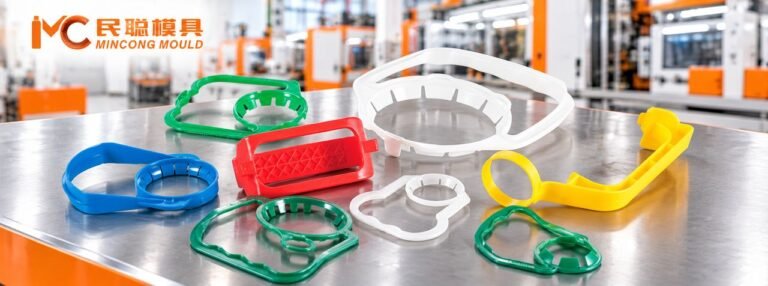
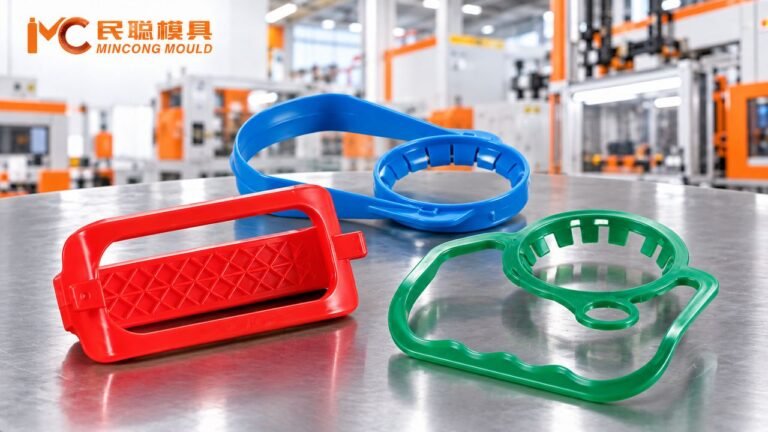
Water-bottle carrying rings, oil-container handles and bucket handles differ in attachment and load path. The mould structure is specified for the actual container rather than a generic handle shape.
Bottle Handles
Water and beverage bottle carrying rings.
Oil Container Handles
Handles matched to bottle necks and dispensing packs.
Bucket Handles
Handle shapes designed around bucket rims and assembly.
What to Send for a Plastic Handle Mould Quote
Provide the handle drawing, matching container, resin, load requirement and injection-machine data so fit, strength and production can be assessed together.
- Handle 2D/3D file and matching container dimensions
- Resin grade and expected load or handling requirement
- Target output and cavity preference
- Injection machine data and assembly or fit test criteria
Handle Mould FAQs
Can a handle mould be designed from a sample?
A sample can support evaluation, but dimensioned drawings and the mating container help define a reliable fit.
What affects handle strength?
Geometry, material, moulding conditions and the way the handle attaches to the container all contribute.
Can the mould fit our current machine?
We can evaluate the tool around your machine’s available space, clamping force and shot capacity.
Handle mould trial video
Selected videos from our project archive. Each clip relates to its own tooling or product example. Select Play to load the YouTube player.
Handle mould trial
Archive video from Mincong Mould’s YouTube channel.
Watch on YouTube ↗PRODUCT SHOWCASE
Explore Related Packaging Moulds
Explore related tooling for your packaging project. Each page explains its own scope and quotation requirements.
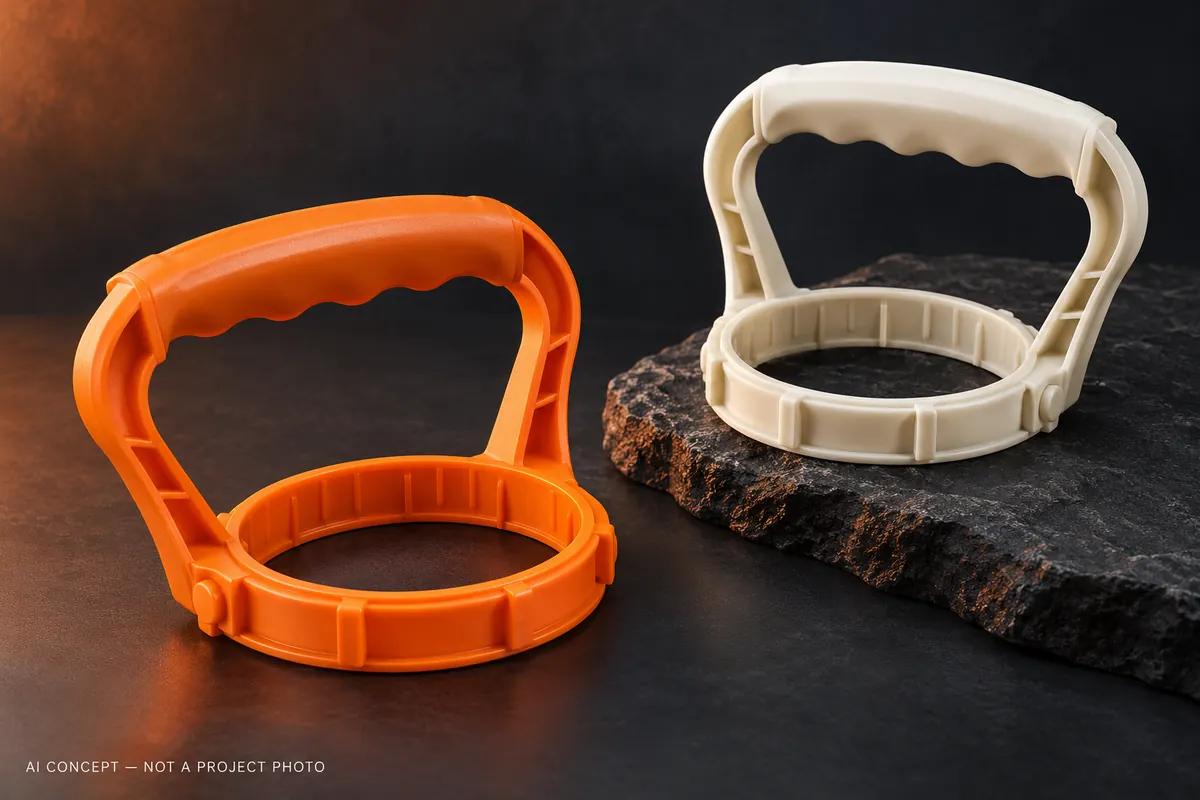 Concept illustration
RELATED PRODUCT
Bottle Handle Moulds for Neck-Collar Fit and Carrying Use
Review bottle handle moulds around collar retention, grip geometry, resin and release. Define filled-pack loading and assembly requirements before tooling.
Explore product →
FUNCTIONAL CLOSURES
Oil & Functional Closure Moulds
Explore tooling for oil caps, dispensing features and defined opening arrangements.
Explore product →
BEVERAGE CLOSURES
Water & Beverage Cap Moulds
Review cap tooling around the bottle neck, closure structure and production requirements.
Explore product →
PREFORM TOOLING
PET Preform Moulds
Explore the preform, neck interface and production conditions that define a tooling proposal.
Explore product →Plan a Handle Mould
Send the handle and container details so we can review fit, load and production requirements.