When the weight of a cap shot drifts from cycle to cycle, stabilise material delivery and the injection unit before correcting cavity steel. A mould cannot reliably compensate for an inconsistent volume arriving at its gates. First establish whether the whole shot changes over time or whether the same cavities remain different within each shot.
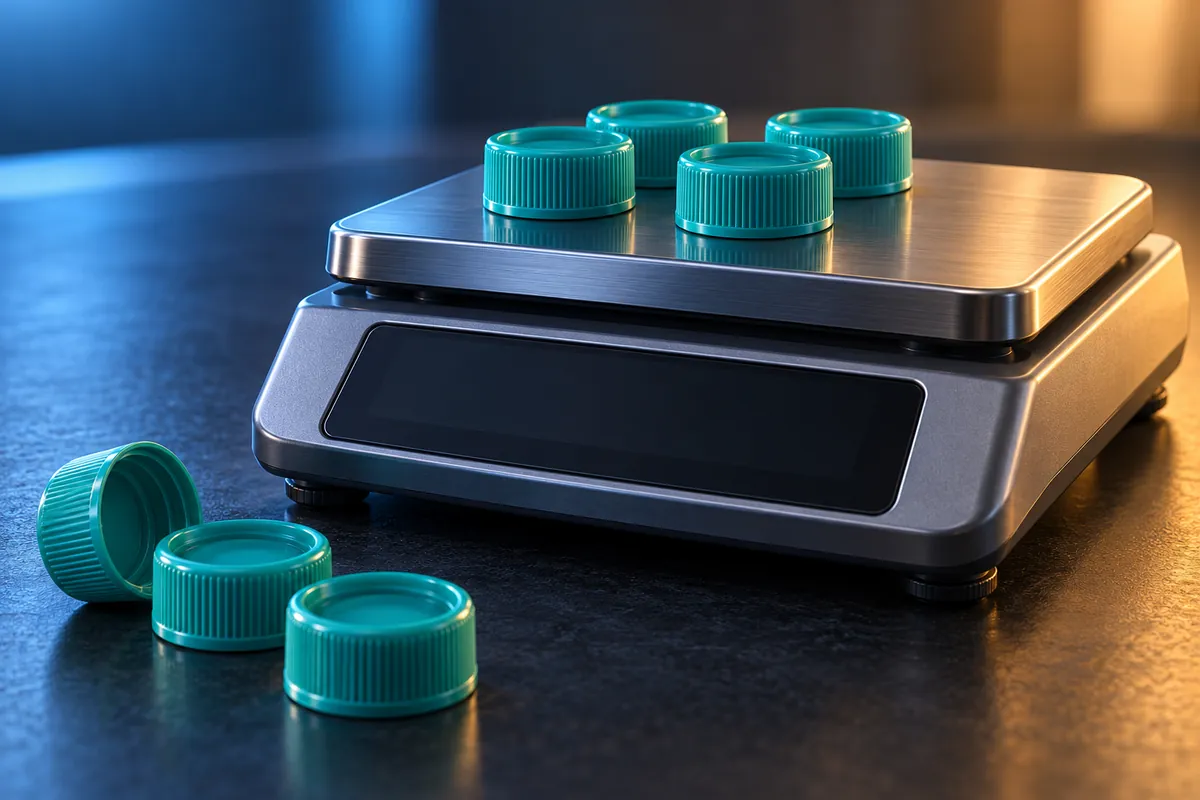
Use the variation pattern to choose the first action
Compare consecutive shots under a defined material, cavity set and sample condition. Keep runners or other attached material consistently included or excluded. A changed weighing basis can imitate a process change.
If most cavities move together, investigate common material and machine influences first. If the same cavity remains relatively light while total shot delivery is stable, use a cavity-balance investigation. These patterns can coexist, so restore the common process before making a fine comparison between cavities.
Restore consistent feeding and recovery
Check whether the intended material reaches the injection unit consistently. Review an identified feed interruption, bridging problem or dosing fault through the equipment's approved procedure. Do not change the mould to mask a material-supply interruption.
Compare recovery completion and the actual operating sequence with the available cooling time. A process that regularly waits for recovery or changes its material history after pauses needs that constraint resolved. Increasing output demand without restoring consistent preparation can make shot-to-shot variation worse.
Check cushion and non-return behaviour together
ENGEL's process guidance identifies melt-cushion fluctuation and wear or closing behaviour of the non-return valve as relevant stability checks. A variable cushion is an investigation signal, not automatic proof that the valve is damaged.
Have qualified personnel evaluate the injection unit and its approved settings. Confirm that a residual cushion is maintained where required and that the screw is not repeatedly reaching its travel limit during pressure transfer. Do not copy a cushion distance or decompression percentage from a different screw and valve arrangement.
Re-establish transfer and pressure support without overpacking
Once feed and injection-unit behaviour are repeatable, review how filling transfers to holding and whether the intended pressure support reaches the cavity. Compare actual behaviour rather than relying solely on identical screen settings. Restore the agreed baseline before changing several parameters at once.
If added holding pressure reduces a weight difference but introduces flash, difficult release or altered closure fit, it has not delivered an acceptable correction. Determine whether the original variation comes from delivery, transfer or gate-related pressure transmission instead of accepting the new defect.
Confirm stability in the parts that matter
After the selected correction, repeat the weight comparison and assess the required dimensions and cap functions. Stable mass does not independently prove sealing, thread fit or hinge performance. Use the actual bottle or mating component where those functions are involved.
Include the relevant transition from start-up or a permitted production pause if it was associated with the original fault. Keep any restart material separate under the agreed production procedure. A short smooth sequence does not establish stability throughout an untested operating window.
For assistance, provide the material identity, total and cavity-specific weight pattern, observed cushion and recovery behaviour and the changes already tried. That evidence supports a focused discussion between tooling and machine specialists. It avoids reworking sound cavities to compensate for a process that is still changing.
Related engineering resources
- Water & Beverage Cap Mould
- Cavity Balance in Injection Molding: Correct Fill Differences Before Raising Pressure
- Packing and Holding Pressure for Caps: Reduce Overpacking Without Losing Fit
- Will the Cap Mould Fit Your Injection Machine? Five Checks Before Cavity Layout
Technical references and scope
Supplier examples describe their own products. They do not establish Mincong certification, supplier affiliation or a validated project result. Proposed checks must be agreed for the specific component, resin and production equipment.