Choose a bottle-cap resin by the closure's functional requirements, then confirm an actual grade and processing basis. PP and HDPE are both relevant to closure projects, but neither polymer name guarantees a workable hinge, seal or retention feature. The useful decision is whether the proposed material and geometry can meet the same agreed tests.
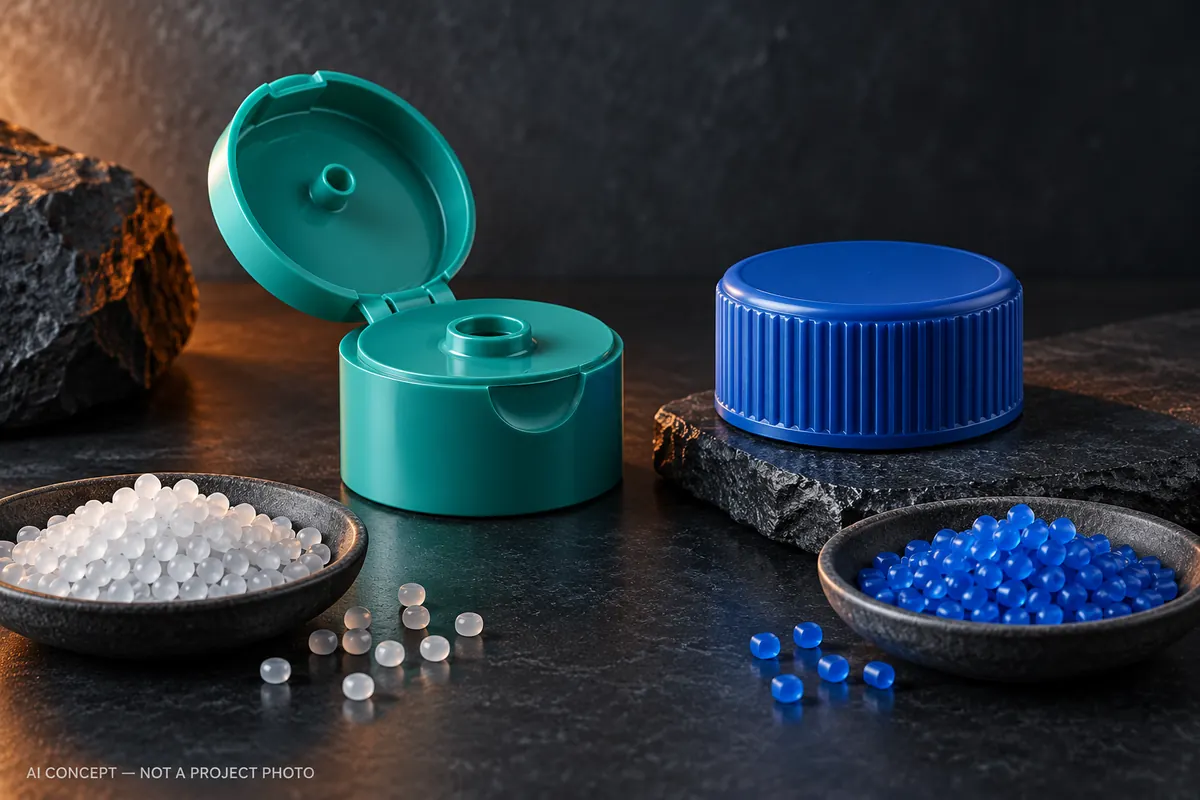
Separate the jobs inside the closure
List the bottle connection, sealing region, opening feature and any living hinge or tamper-evident element. A cap body that needs a firm thread and a component that needs controlled flexing do not necessarily benefit from the same material choice.
For a one-piece flip top, the lid and base must function through the connecting hinge. For a screw cap without a hinge, bottle engagement and seal behaviour may dominate. A multi-part sports closure adds movement and assembly requirements. Establish that functional map before comparing a pair of resin datasheets.
Compare grades rather than stereotypes
Request the candidate grade's technical data and processing guidance, including the intended application and relevant contact documentation. Compare the properties important to the actual closure. Do not reduce the decision to a blanket statement that one polymer is stronger, clearer or easier to process.
Within a polymer family, grades can serve different requirements. Supplier portfolios include several closure materials and grade families. This is why the quotation and trial plan should identify the actual resin, colour system and any allowed alternatives instead of saying only PP or PE.
Treat a material change as a fit change
If an existing cap is being transferred from one material to another, retain the approved bottle and mating components for comparison. Assess thread engagement, sealing interference, latch position and retention after the agreed conditioning interval. Matching the original part weight does not demonstrate equivalent geometry or function.
The original tool's dimensional compensation and operating condition may not suit the new grade. First establish the moulded result under a suitable processing basis. If a correction is necessary, define which feature must change and whether a replaceable insert or more extensive revision is required. Avoid recutting steel from a generic shrinkage percentage alone.
Resolve the failure that matters to the customer
If a hinge fails, review the hinge geometry, flow and processing as well as material. If a cap leaks, inspect the actual seal and assembly rather than assuming a different resin will cure the problem. If removal is difficult, separate bottle-opening force from release out of the mould.
A useful material comparison keeps the bottle, test method and acceptance limits identifiable. When different geometries are needed for each resin, compare the resulting closure systems honestly. A test of two unmatched prototypes is not evidence that the polymer alone caused the difference.
Include the production consequence
Ask whether the selected grade can be filled, packed, cooled and released within the proposed machine's usable range. Review gate residue, cavity consistency and the effect of the intended colour system. A lower resin purchase price can be offset by rejects or a production condition that does not meet the output plan.
Where a runner configuration is being changed at the same time, separate those effects from the material comparison. Keep a reason for each intervention. The target is a stable accepted closure, not simply the shortest machine display cycle or the lightest sample.
Make the selection auditable without overloading the RFQ
For each candidate, state the grade, geometry revision, production basis and tests it must pass. Record whether the proposal is a material-only substitution or a redesigned closure. Choose the option that satisfies the intended application with an agreed manufacturing route.
For a mould review, send the cap and bottle data, candidate grades and the functional problem you need to solve. Use the water-cap or flip-top product page to define the tooling scope. No universal grade recommendation or food-contact approval is implied by this comparison.
For caps that crack after assembly or exposure, the closure stress-cracking guide compares assembly, geometry and formulation-related corrective options.
Continue the project review
Water cap moulds · Flip top cap moulds · HDPE shrinkage and tool correction · Living hinge design
Send drawings or samples for a mould review →
Technical references and scope
General application and engineering references checked on 30 October 2026. These do not establish Mincong project performance or transfer another supplier’s design, certification or claims.