Syringe Barrel Moulds for Defined Bore and Interface Requirements
Mincong supplies injection mould tooling for plastic syringe barrel projects, with the mould proposal developed around the customer's component drawing, specified resin and acceptance requirements. The barrel, its mating components and the intended manufacturing equipment need to be reviewed together before the cavity layout is released.
This page concerns barrel tooling within our medical packaging mould range. Finished-device assembly, production-environment qualification and product validation need their own defined project scope.
Request a syringe barrel mould review
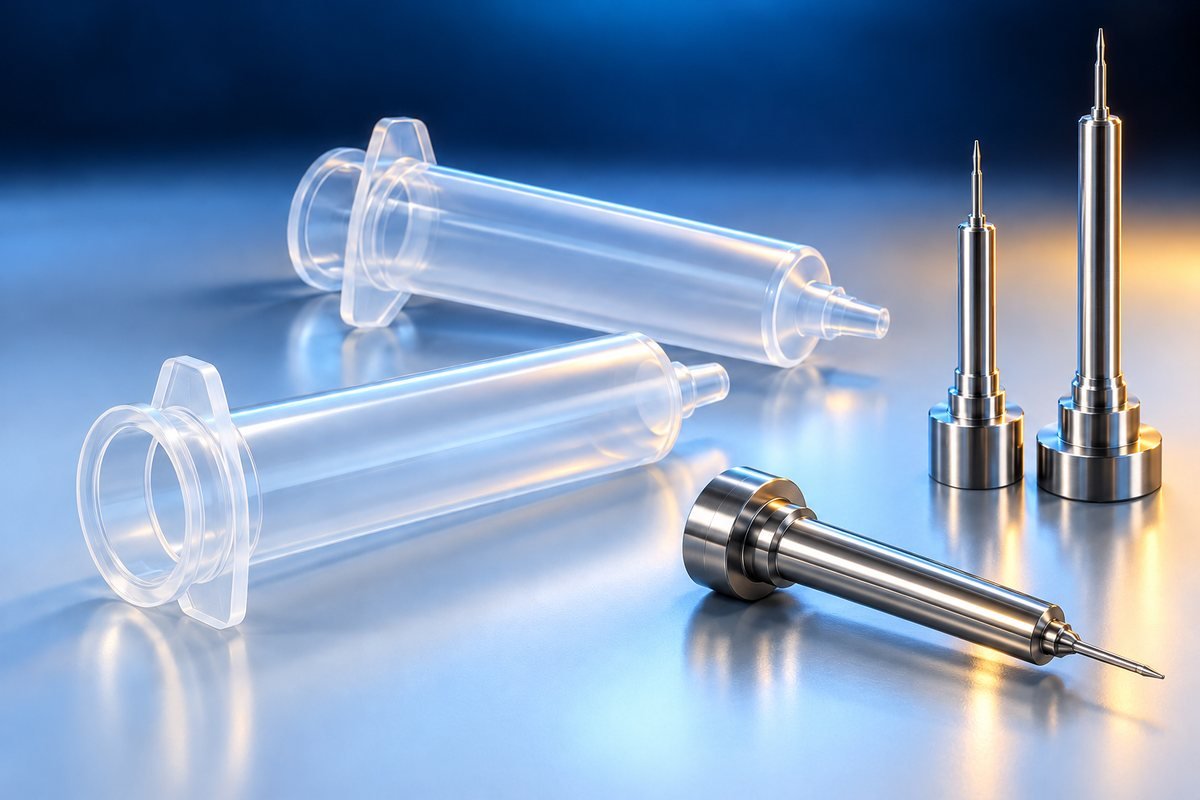
Build the proposal around the barrel's functional surfaces
A drawing should distinguish the bore, outer wall, flange and outlet features that matter to the intended component. Identify which surfaces contact a mating part, which dimensions control assembly and which appearance areas have special limits. The requirements can differ between barrel designs; a familiar capacity description does not define the tooling.
For the bore, agree the relevant measurement positions and the conditions under which samples will be checked. If roundness, taper, straightness or wall distribution is important, specify that characteristic rather than leaving it inside a general request for precision.
The proposed core and cavity arrangement should then be reviewed against those requirements. Where the design includes a slender core or a demanding interface, ask how the tooling concept addresses the applicable support, alignment and filling conditions. The answer should refer to the actual component, not a generic multi-cavity photograph.
Resolve geometry and mating-part requirements together
A tooling change that makes one dimension easier to manufacture may also affect the mating component. Before approving such a change, compare the revised barrel with the customer-supplied interface references.
For example, a hypothetical proposal to alter an internal feature should identify its effect on the defined plunger or other mating-part requirement, where applicable. That is a design discussion, not evidence that one particular geometry suits every syringe.
Our recommended review separates three decisions: the component geometry the customer needs, the tool design used to produce it, and the sample checks that will show whether it has been achieved. Keeping those decisions connected helps prevent an attractive trial sample from becoming an incomplete acceptance record.
Select the feeding and cooling arrangement for the component
Gate location, gate residue limits, mould layout and cooling access should be considered as a package. Ask the supplier to show where the part is fed, which surface receives the gate and whether the proposed arrangement conflicts with an interface or appearance requirement.
Husky's official syringe-component resource identifies gating options, cooling and engineering studies as relevant design subjects. It is a useful basis for questions, rather than a requirement to use one supplier's technology.
If YUDO or Husky is proposed during sourcing, request the exact configuration, resin application review, control interfaces and service information. A brand name does not settle the gate design. Husky suitability for a Mincong project must be confirmed before it is offered as part of that project's supply.
The same discipline applies to cooling. Define the factory's available cooling supply and the intended operating conditions, then review the mould arrangement against them. No cavity count or cycle time is promised here without an agreed component and configuration.
Confirm the machine and removal interfaces before manufacture
A machine tonnage alone is not enough to define installation. Supply the intended machine model and relevant installation, injection, opening, ejection and utility information for the tooling review.
Where downstream handling or automatic removal is required, identify the equipment and responsibility boundary. Agree what leaves the mould, how that part is supported and which interfaces must be provided. Do not assume a complete automated line is included in a mould quotation.
| Project input | What it allows the tooling team to define |
|---|---|
| Current barrel drawing and mating-part references | Functional geometry and features requiring specific checks |
| Specified resin grade and permitted formulation | The material basis for design and trial planning |
| Output requirement and intended machine | A proposed layout and equipment-interface review |
| Gate and appearance requirements | Feeding options and surfaces that must be protected |
| Inspection and validation responsibilities | Trial evidence, handover documents and exclusions |
Agree a trial that answers the purchase requirements
Before the trial, identify the resin, machine and intended sample-selection basis. Keep samples traceable to their cavity positions where the agreed inspection requires it. Review the nominated bore, wall, flange and outlet characteristics using the agreed methods.
Where functional checks involve another component, use the identified mating part and the customer's defined test. A dimensional report and a functional result answer different questions; neither should be silently substituted for the other.
List remaining actions against specific features. If a correction changes an accepted interface, return that feature to review and repeat the affected checks. Agree which final drawings, component references, maintenance information and trial records form the handover.
Send the information needed for a useful quotation
Provide the barrel drawing or a permitted sample reference, resin grade, intended machine, output requirement and the features that govern acceptance. If some information is still open, identify it as an open design item so the quotation can state its assumptions.
Discuss any additional manufacturing-environment, documentation or validation requirements at enquiry stage. This page does not establish device certification, sterilisation performance or a qualified production environment.
Send your syringe barrel mould enquiry and identify the component requirements that need engineering review.
PRODUCT SHOWCASE
Explore Related Medical Mould Products
Explore related tooling for your packaging project. Each page explains its own scope and quotation requirements.
 Concept illustration
TUBE-BODY TOOLING
Blood Collection Tube Moulds
Review tube walls, closure interfaces, cooling and release around the approved component specification.
Explore product →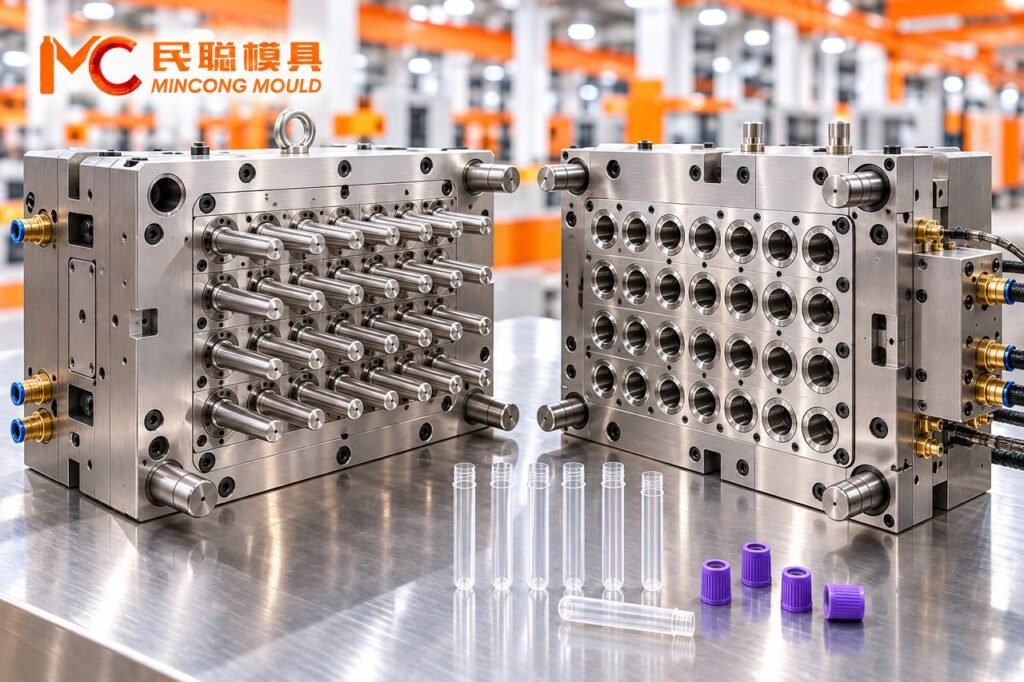
MEDICAL CONSUMABLE TOOLING
Medical Packaging Moulds
Explore the tooling scope for tubes, tips, closures and defined medical components.
Explore product →Images marked as concept illustrations are AI-generated, not project photographs. Review each page for its tooling scope and project-specific requirements.